- Call on : +44 (0)20 8559 8295
- Open Hours : Mon-Fri 09:00 - 17:00
Premier Security Ballistic & Blast Ltd

- Services
- Consultancy
- Products
- Bollards & Gates
- Curtain walling systems
- Security Doors
- Security Windows
- Hammerglass
- High-Value Retail Security Solutions
- Hostile Vehicle Mitigation (HVM)
- Residential Security
- Retractable Security Grilles
- Security Portals & Revolving Doors
- Security Shutters
- Projects
- Industries
- About
- Residential
The Ultimate Guide to Powder Coating and Durable Finishes
Powder and powder coat technology have revolutionized the way industries protect and finish surfaces. Whether you are a DIY enthusiast, an automotive professional, or an industrial coater, understanding powder coating processes, materials, and techniques is essential. This article delves deep into coating powder, powder colors, and specialized finishes, explaining why powder coat is preferred for durability, aesthetics, and environmentally friendly applications. By reading this guide, you’ll gain insights into powder coating technology, discover how to achieve perfect finishes, and learn tips to optimize your powder coat projects.
Article Outline
- What is Powder Coating and How Does It Differ from Traditional Spray Paint?
- How Does Powder Coating Work on Metal Surfaces?
- What Are the Advantages of Using Powder Coatings?
- Understanding the Powder Coating Process: Step by Step
- How to Choose the Right Powder Colours and Pigments
- What Role Does Gloss Play in Powder Coating?
- How to Achieve Perfect Adhesion When Applying Powder
- Troubleshooting Common Powder Coating Problems
- Specialty Finishes: Metallics, Dark Grey, and More
- Sustainable Practices in the Powder Coating Industry
- Industries We Work With
- Frequently Asked Questions (FAQs)
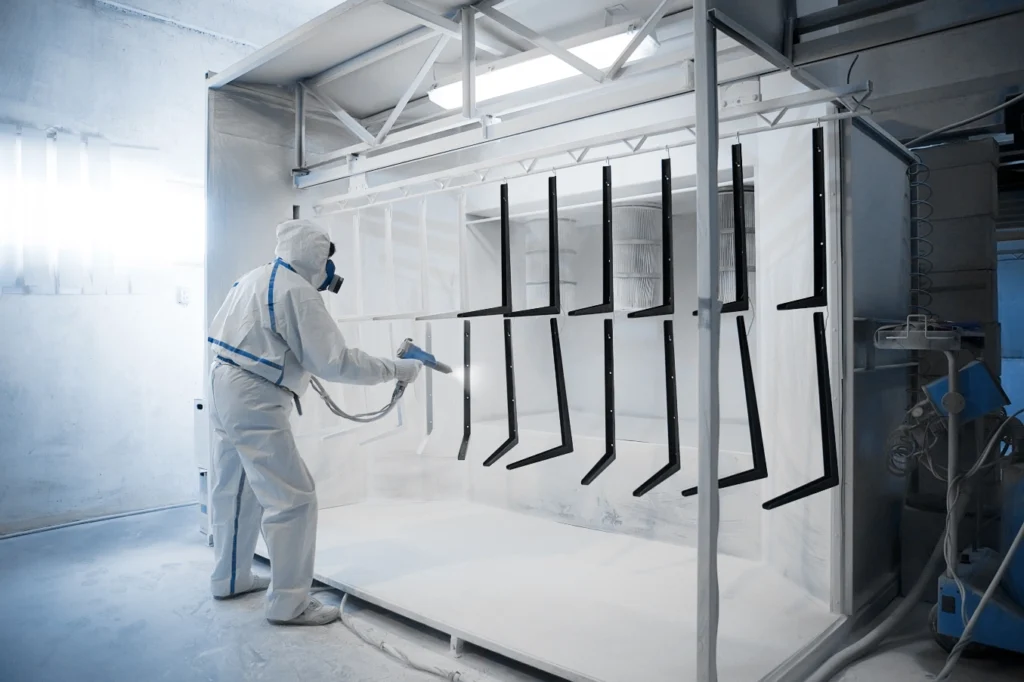

What is Powder and How Does It Differ from Traditional Spray Paint?
Powder is a dry substance used in the powder coating process that adheres to metal, plastic, or other substrates. Unlike conventional spray paint, powder does not rely on solvents to carry pigments. Instead, powder particles are electrostatically charged and sprayed onto the workpiece, creating a uniform coating layer.
Powder coat offers several benefits over liquid coatings. Because it is applied as a dry powder, there is minimal overspray and no volatile organic compounds, making it environmentally friendly. The powder coating film is thicker and more durable than many liquid finishes, offering superior corrosion protection, scratch resistance, and chemical and mechanical durability.
Another difference between powder and spray paint is the curing process. Powder requires heat to melt and flow, forming a continuous polymeric film. Spray paint, in contrast, dries at ambient temperature and often requires multiple layers to achieve a durable finish. The curing process ensures that powder coat is tough, resilient, and long-lasting on both indoor and outdoor applications.
How Does Powder Coating Work on Metal Surfaces?
Powder coat is widely used on metal substrates due to its strong adhesion and protective properties. The process begins with pre-treatment, which often includes sandblast or chemical cleaning to remove contaminants and improve the adhesion of the powder. Proper pre-treatment is essential for corrosion protection, especially when using zinc or metallic-based powders.
Once pre-treated, the workpiece is sprayed using a spray gun. The electrostatic charge applied to the powder ensures that it is evenly distributed across the metal surface. The charged cloud of powder particles is attracted to the grounded metal, creating a uniform coating. Following spraying, the metal is placed in an oven where the curing process melts the powder, forming a continuous, durable film.
Powder coated tough metal can resist chemical attacks, scratches, and UV degradation. This makes powder coat ideal for automotive parts, household appliances, and architectural facades. The combination of polymer resin and additives ensures a durable finish that lasts for years.
What Are the Advantages of Using Powder Coatings?
Using powder coatings comes with multiple advantages over traditional paint systems. First, the durability of powder coat is unmatched. The cured finish provides a tough, corrosion-resistant layer that protects the underlying metal from environmental damage.
Second, powder coatings are environmentally friendly. Unlike solvent-based paints, powder emits no volatile organic compounds, reducing air pollution and improving workplace safety. Additionally, any overspray can often be reclaimed and reused, reducing material waste.
Lastly, the aesthetics and finish options are vast. Powder colours, gloss levels, metallics, and specialty finishes like dark grey or textured surfaces allow for custom coatings tailored to specific applications. From automotive parts to household appliances, powder coatings enhance both functionality and visual appeal.
Understanding the Powder Coating Process: Step by Step
The powder coating process begins with substrate preparation. Metal surfaces are typically sandblast or chemically treated to remove rust, grease, and old coatings. Pre-treatment improves the adhesion of the powder, ensuring a uniform and durable finish.
Next, applying powder involves spraying the charged powder particles onto the workpiece using a spray gun. Electrostatic charge helps the powder stick evenly, covering complex geometries without pooling or runs. The particle size and flow of the powder can be adjusted for optimal coverage.
Finally, the curing process solidifies the coating. Heated at the right °C for a specified curing time, the powder melts, flows, and reacts to form a continuous film. The result is a tough, uniform, and durable finish suitable for indoor and outdoor applications. Powder coating technology continues to evolve, introducing new polymers, TGIC, polyester resins, and UV-stable formulations.
How to Choose the Right Powder Colours and Pigments
Selecting the right powder colors is crucial for both aesthetics and performance. Powder colors are available in RAL standards, metallics, and specialty finishes. Pigments influence the gloss, opacity, and lightfastness of the final coating.
Polyester powders are popular for outdoor applications due to their UV resistance and durability. Epoxy resin powders provide excellent chemical resistance, while polyurethane powders offer flexibility and toughness. When choosing a color, consider the environment, desired gloss level, and compatibility with other coatings.
Additives can be incorporated to achieve unique effects, such as metallic flecks or texture. Using powder coatings with the right pigments and additives ensures a visually striking and long-lasting finish for any project.
What Role Does Gloss Play in Powder Coating?
Gloss is a critical factor in the final appearance of a powder coated surface. High-gloss finishes reflect more light, giving surfaces a polished, mirror-like look, while matte or satin finishes reduce glare and hide surface imperfections.
The gloss level can be controlled during the powder formulation stage by adjusting resin type, pigment load, and particle size. A well-balanced gloss enhances the durability of the coating, as it contributes to the uniform curing of the polymer. Powder coatings with optimal gloss not only look better but are easier to clean and maintain over time.
How to Achieve Perfect Adhesion When Applying Powder
Adhesion of the powder is fundamental to the success of any powder coating project. Pre-treatment of the substrate is the first step to ensure proper adhesion. Techniques like sandblast or chemical etching remove contaminants and create a rough surface for the powder to grip.
Electrostatic spraying also plays a role in adhesion. By charging the powder particles, they are attracted to the substrate and form a uniform layer. Properly controlling the electrostatic charge and spray parameters ensures even coverage, reducing the risk of orange peel, bare spots, or uneven thickness.
Finally, curing the powder at the correct temperature and duration ensures that the coating chemically bonds to the substrate. The curing process not only solidifies the finish but also maximizes the adhesion, providing a durable and corrosion-resistant surface.
Troubleshooting Common Powder Coating Problems
Even experienced coaters may encounter issues during powder coating. Common problems include uneven coverage, orange peel, or poor adhesion. These can arise from improper substrate pre-treatment, incorrect powder particle size, or inconsistent electrostatic charge.
Using a troubleshooting guide can help diagnose problems quickly. Adjusting the spray gun nozzle, modifying powder flow, or improving curing conditions can often resolve defects. Regular maintenance of the powder coating equipment and consistent process monitoring are essential to ensure a flawless finish.
Choosing the right powder and following proper procedures reduces waste and ensures consistent, high-quality results. Powder coating done with precision guarantees a professional, long-lasting finish for metal, plastic, and other substrates.
Specialty Finishes: Metallics, Dark Grey, and More
Specialty finishes expand the design possibilities of powder coating. Metallics, dark grey, and textured finishes create visual depth and sophistication. These finishes use unique pigments, additives, and polymers to achieve effects that standard coatings cannot replicate.
Polyester and polyurethane powders are often combined with metallics to create vibrant, UV-resistant surfaces. Dark grey finishes are particularly popular in industrial applications, providing a sleek, professional look while hiding minor scratches and wear.
Specialty finishes require careful handling during spraying and curing. Factors like curing time, electrostatic charge, and particle size must be precisely controlled to avoid defects and maintain durability. These finishes elevate powder coated surfaces to a premium level.
Sustainable Practices in the Powder Coating Industry
The powder coating industry is committed to environmentally friendly practices. Unlike solvent-based paints, powder releases minimal volatile organic compounds, making it safer for workers and the environment. Overspray can be collected and reused, reducing material waste and lowering costs.
Energy-efficient curing ovens and innovative powder formulations further reduce environmental impact. Using powder coatings also extends the lifespan of metal products, reducing the need for replacements and conserving resources.
From using UV-stable powders to incorporating eco-friendly additives, sustainable practices in powder coating align with global efforts for green manufacturing. Suppliers and coater services increasingly prioritize these methods, ensuring both superior performance and reduced environmental footprint.
Industries We Work With
Engineering & Manufacturing
Our experts frequently work with engineering and manufacturing companies to ensure that their machines and products operate at maximum efficiency with high levels of reliability. By providing our powder coating services, we help extend the lifespan of metal components, improve corrosion protection, and deliver a uniform coating powder finish that meets rigorous industrial standards.
Automotive Industry
Powder coating is crucial within the automotive industry, as the materials used must combine durability, sustainability, and strong aesthetic appeal. Our powder coat applications ensure that car parts, frames, and accessories receive a tough, scratch-resistant finish that withstands chemical and mechanical wear while maintaining a visually striking gloss or metallic finish.
Design and Build
In the design and build industry, including furniture, household appliances, and consumer products, utilizing powder coating increases product durability and enhances aesthetics. Our powder coated tough surfaces not only protect against corrosion and wear but also provide a smooth, attractive finish that improves the user experience and adds value to your products.
Speak to an expert regarding Powder Coating today!
Ready to transform your metal, plastic, or household projects with a durable, vibrant powder coat finish? Contact our expert coater services today to explore specialty finishes, metallics, and eco-friendly powder coatings.
Don’t compromise on quality, upgrade your surfaces with the latest powder coating technology now!
Our experts will:
- Assess your project requirements and security needs
- Recommend compliant and proportionate solutions
- Provide technical guidance and specification support
- Advise on design, installation and next steps
FAQ’s
Can powder coat be applied on plastic as well as metal?
Yes! While metal is the most common substrate, specialized powders and pre-treatment methods allow powder coating on certain plastics. Proper adhesion and curing are crucial.
How long does powder coating last?
Powder coat is extremely durable. With correct pre-treatment, curing, and maintenance, it can last 10–20 years outdoors without losing its finish.
Can I use spray paint instead of powder coating?
Spray paint is suitable for small DIY projects but lacks the durability, chemical resistance, and corrosion protection of powder coat.
Is powder coating environmentally friendly?
Absolutely. Powder coatings produce minimal volatile organic compounds, have reusable overspray, and extend product life, reducing waste.
What colors and gloss levels are available?
Almost any color, including RAL standards, metallics, and dark grey, is available. Gloss levels range from matte to high-gloss, depending on the powder and resin used.